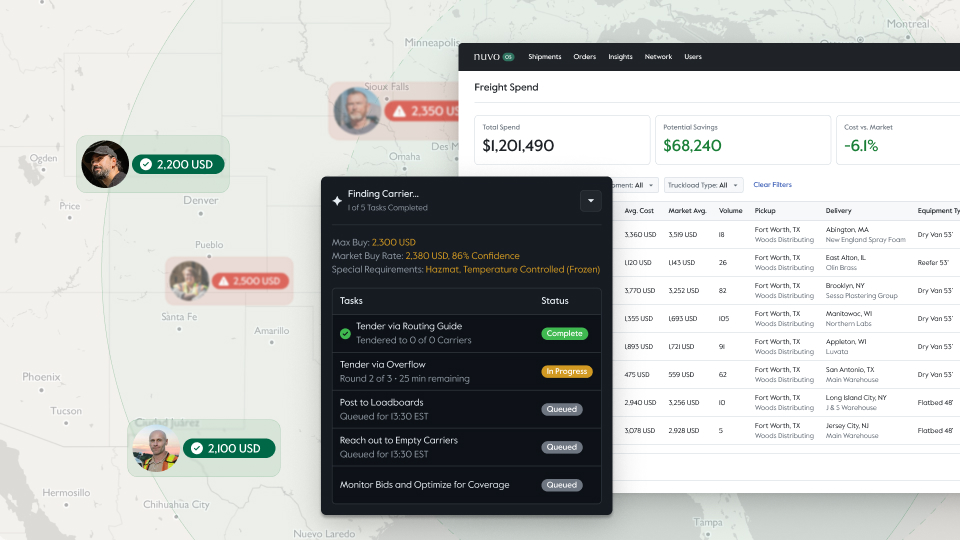
The difference between a freight operating partner and a freight broker is accountability. A freight broker is a transactional intermediary: you submit a load, they find a carrier, they earn a margin, and the relationship ends there. A freight operating partner is contracted for your entire freight program and is accountable for its ongoing performance — on-time delivery rates, cost per lane, invoice accuracy, and carrier compliance — tracked over time, not load by load.
Key Takeaways
- Broker accountability: Per-shipment only — no obligation to your overall freight performance
- Freight operating partner accountability: Program-level — measured against KPIs for all lanes, all modes, all carriers
- Data ownership: Brokers retain shipment data; freight operating partners share it with the shipper in real time
- Carrier relationships: Brokers source from open markets; freight operating partners maintain pre-contracted carrier networks
- Cost structure: Brokers earn a per-load margin (often undisclosed); freight operating partners charge a transparent management fee
- Who each serves: Brokers fit companies with occasional or simple freight needs; freight operating partners fit companies shipping 100+ loads/month with complex lane structures
The Accountability Gap
Most shippers who work with multiple freight brokers encounter the same problem: nobody is accountable for the program. Each broker is accountable for the one load you gave them. If a carrier they selected delivers late, they may rebook — but they have no obligation to prevent the pattern from recurring. If your rates are 15% above market on a core lane, they have no reason to flag it.
A freight operating partner closes this gap. Because the provider is contracted for the program, their business outcome is tied to your freight program's health. Late delivery rates, accessorial leakage, and rate variance become their problems to solve — proactively, not reactively.
FactorFreight BrokerFreight Operating PartnerScope of accountabilityIndividual shipmentFull freight programPerformance measurementNone (your team tracks)Shared KPI dashboardsRate transparencyMargin often undisclosedFee structure disclosedCarrier relationshipsSpot market and open boardsPre-contracted carrier networkData accessLimited to your loadsFull visibility, real-timeBest forAd hoc or simple freight100+ loads/month, complex lanes
When a Freight Broker Is the Right Choice
A freight broker is the right tool when freight is:
- Low volume (fewer than 50 loads per month)
- Highly seasonal with unpredictable peaks
- Simple in mode and lane structure
- Not a core operational cost or strategic concern
For companies in this position, maintaining a few broker relationships for spot coverage is efficient and cost-effective.
When You Need a Freight Operating Partner Instead
The freight broker model breaks down when scale and complexity increase. Shippers working with managed transportation providers like Nuvocargo — a freight operating partner serving US manufacturers and distributors — typically reach this point when:
- They are managing 5+ freight brokers with no unified view of performance
- Logistics staff spend more time tracking down shipment status and reconciling invoices than managing freight strategy
- Lane-level rate data is unavailable or inconsistent across brokers
- Finance cannot reconcile freight spend reliably each month
See What Is a Freight Operating Partner? for the full model breakdown.
Frequently Asked Questions
What is the main difference between a freight broker and a freight operating partner?
A freight broker handles individual loads on demand with no ongoing accountability. A freight operating partner manages your entire freight program and is measured against performance KPIs — on-time delivery, cost per load, invoice accuracy — across all lanes and carriers.
Do freight brokers share rate data with shippers?
Freight brokers typically do not disclose their carrier buy rate or the margin they earn per load. Freight operating partners operate on a transparent fee model and share full rate and performance data with the shipper.
Can I use both a freight broker and a freight operating partner?
Yes. Some shippers maintain a freight operating partner for their core lanes and use spot brokers for overflow capacity. The freight operating partner typically manages spot sourcing within their carrier network as part of the service.
Is a freight operating partner more expensive than a freight broker?
Not necessarily. Freight brokers embed an undisclosed margin into every load. A freight operating partner charges a management fee but may access better carrier rates through their contracted network. The total cost comparison depends on volume, lane mix, and the current quality of broker execution.
How do I switch from freight brokers to a freight operating partner?
The transition typically takes 60–90 days and involves a lane audit, carrier contracting, and system integration. A freight operating partner manages the migration. See What to Expect in the First 90 Days With a Freight Operating Partner for a step-by-step walkthrough.
Data Sources
If you're ready to make the switch, follow our 60-day managed transportation transition guide for a step-by-step implementation roadmap.
If you're ready to make the switch, our 60-day managed transportation transition guide walks you through the entire process step by step.