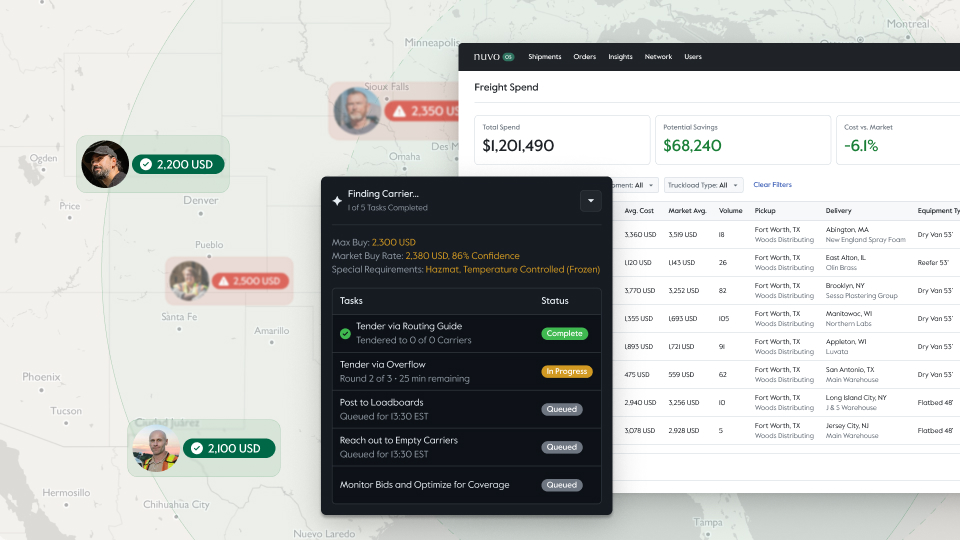
Every RFP feels familiar. You send out your lanes, brokers return bids, you pick the lowest rates, and by midyear, finance is asking why freight spend is 10% over plan. The truth is, the old checklist: licensed, bonded, insured, doesn’t surface the issues that drain budgets and damage service in 2025. Detention, fraud, rate volatility, invoice disputes, and exception firefighting are the real costs. And yet, many shippers don’t push brokers hard enough on these pain points. The brokers that matter today aren’t the ones who promise trucks. They’re the ones who can prove they manage the work behind the freight. Here are the questions that reveal the difference. Detention is your broker’s report card According to the American Transportation Research Institute , detention costs grew 18% year-over-year in 2024. For many shippers, that’s the fastest-growing line item in transportation spend. Most brokers still coordinate appointments with Outlook inboxes and spreadsheets. The result is delays, missed windows, and cascading detention charges. At scale, appointment scheduling generates thousands of back-and-forth emails a week. Forward-looking providers have started experimenting with automation. We’ve seen AI agents that handle 80% of truckload appointment scheduling, freeing operations staff to focus on exceptions instead of inboxes. You don’t need your broker to be building AI, but you should expect a clear process: How do they prevent detention, how do they escalate with facilities, and how do they measure dwell? Coverage claims mean nothing without lane-level proof Every broker says “we cover your lanes nationwide.” The only thing that matters is data. What was their tender acceptance last quarter in lanes like yours? How often did they fall off tenders? Which carriers did they actually use? In 2024, DAT iQ tracked spot market swings of 15–25% on some lanes. Without dependable coverage, you’re pushed into those swings. A broker who can’t produce lane-level data is gambling with your spend. Visibility is about exceptions, not tracking Track-and-trace is commodity. What matters is how a broker handles exceptions. If a load is late to a Walmart DC, a ping on a map won’t save you from OTIF penalties, which can reach 3% of invoice value. A strong broker has documented escalation playbooks by receiver and can show you how they handled real exceptions last quarter. Some are even using AI to reduce the noise: one project cut 80% of the “status chasing” emails by surfacing true risks in dashboards automatically. The question isn’t “do you offer visibility?” It’s “how do you keep exceptions from surprising me?” Learn more about Truckload Procurement in 2025: How to Secure Reliable U.S. Freight Capacity.
Related reading